A Complete Guide to Migrating to Shopify Successfully in 2025
Technology - 18 Jun 2025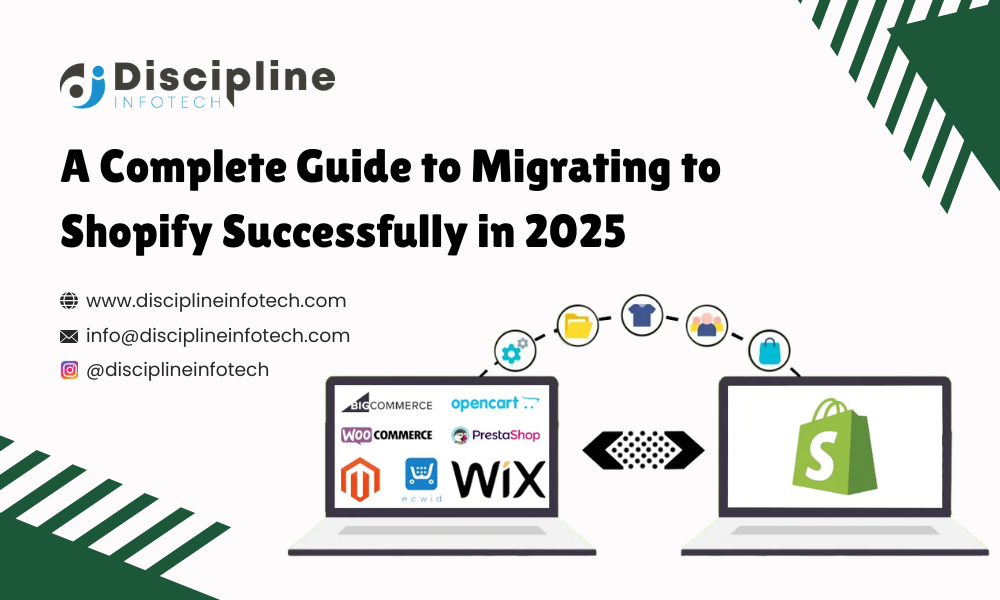
Businesses are seeking e-commerce platforms that offer speed, ease of management, and the ability to scale up as needed, while streamlining operations. This has led many to migrate to Shopify for a more efficient and scalable solution. Shopify has emerged as a favorite among merchants due to its ease of use, comprehensive features, and strong integrations. Brands using WooCommerce and Magento or any other platform are increasingly migrating to Shopify. We have put out this blog as a complete guide that aims to assist you with a smooth Shopify migration guide in 2025.
Why Businesses Are Migrating to Shopify in 2025
As e-commerce continues its rapid expansion, there is a growing need for an easy-to-use, top-performing platform. Shopify is leading the way with its innovative features.
- A hosted solution that removes server management stress
- An extensive theme library offered, combined with a simple drag-and-drop editor
- Incredible site speeds, mobile optimization, and built-in SEO
- An enormous app ecosystem for extended capabilities
As a result of these factors, an increasing number of businesses are establishing an online presence. Migrate to Shopify helps businesses reduce complicated tech management and enables them to zoom in on marketing, branding, and revenue.
Key Considerations Before You Migrate to Shopify
There are some very critical factors to address before Shopify migration:
- Inventory of Information: Create an inventory of all the information that needs to be migrated, such as products, customers, orders, categories, and even blog posts.
- Your Store’s Look: Consider if you are trying to recreate the look of your store or use this opportunity to change the look of your store to a more modern look using Shopify themes.
- SEO Migration: Preserving SEO migration is as important as planning the migration itself. Migration mustn't lead to a loss of traffic. You should preserve 301 redirects and important meta information.
- Custom Features: List out all the custom features your existing platform has, and consider if they need to be replicated using Shopify apps or custom-built on Shopify.
Migrating to Shopify requires meticulous preparation to avoid costly errors later on.
Step-by-Step Shopify Migration Guide
Regardless if You are moving from WooCommerce, Magento, or a custom platform. Here is a simplified process for a successful Shopify migration.
1. Backup and Analyze Current Store Data
Make sure you back up product information, customer profiles, order history, images, and SEO information. Ensure you export all of it.
2. Choose the Right Shopify plan.
Choose a plan that is ideal for your store’s size and traffic requirements. Shopify has multiple tiers based on features and transaction volumes, and understanding Shopify Pricing India can help you select the most cost-effective option.
3. Configure Your New Shopify Store
Start your Shopify account and set up your general settings, payment methods, shipping, and taxes.
4. Move Store information.
Shopify’s importers or other apps are useful for securely transferring your data.
5. Update the design and theme.
Shopify has its theme store, and you can always create your own to showcase your brand.
6.Conduct functionality tests in your Shopify store.
Check the functionality of the store, including payments, mobile views, and overall checking systems, before going live.
7. Launch and Evaluate Your Shopify Store
Launch the store when you are happy with it and keep monitoring for issues. Use Google Analytics and Facebook Pixel for tracking.
Following this Shopify migration guide step-by-step helps preserve your site's user experience and SEO while minimizing downtime.
WooCommerce to Shopify Migration – What You Need to Know
When comparing WooCommerce with Shopify, the latter allows for improved scalability and ease of management. Nevertheless, there are certain factors to consider when WooCommerce to Shopify migration.
- Given the abundance of plugins in WooCommerce, it may be necessary to search for corresponding Shopify apps.
- The structure of databases is different. Please ensure that all necessary fields, such as SKUs, tags, and attributes, are included during migration.
- Make sure you do not overlook the permalink structure and have a fail-safe plan for your URL redirects.
The upgrade also helps growing businesses as Shopify streamlines inventory and order management, especially when paired with expert Shopify Development Services.
Magento to Shopify Migration – A Smart Move for 2025
While Magento is powerful, it is also incredibly resource-heavy and difficult to manage. Businesses are beginning to migrate from Magento to Shopify migration so that they can streamline their processes.
- Faster time-to-market
- Lower total cost of ownership because of reduced hosting and development requirements
- Simplified updates and app integrations, Better support for non-technical users
If you are fed up with the costly maintenance and steep learning curve of Magento, migrating to Shopify could be a wonderful alternative.
Post-Migration Checklist
Once you've migrated your store, make sure to complete these tasks before relaunching:
- Set up 301 redirects for all previous URLs.
- Product categories, tags, and collections should be checked again.
- Reintegrate or reinstall third-party marketing tools and analytics.
- Please test the checkout and payment workflows once more.
- Please update your marketing and announcements email.
A methodical approach after launching ensures that your Shopify migration does not disrupt business operations or the trust customers have in your brand.
Common Mistakes to Avoid When Migrating to Shopify
SEO Neglect: Not implementing redirects or preserving meta tags can lead to a loss of website traffic.
- Insufficient testing: Going live without thorough quality assurance processes increases the risk of having broken links and payment failures.
- Hastening the launch: Post-migration processes can lead to outdated information being presented to customers if skipped.
Steering clear of these mistakes will ensure your transition while migrating to Shopify is professional and effortless.
Conclusion – Ready to Migrate to Shopify Seamlessly?
With its intuitive interface and wide array of features, switching to Shopify in 2025 can be one of the best decisions for your online business. Whether you are a startup or a large enterprise, Shopify has everything a business needs.
If you are planning a WooCommerce to Shopify migration, Magento to Shopify migration, or another custom platform, having a strategy in place will be essential. This guide exists to help you navigate your Shopify migration smoothly.
A professionally done Shopify migration will secure your store’s data and traffic while simultaneously improving the design, usability, and overall scalability of the store. Contact us to ensure your migration is smooth, secure, and fully optimized for growth.
Contact Us
Granted Response within One Business Day!
